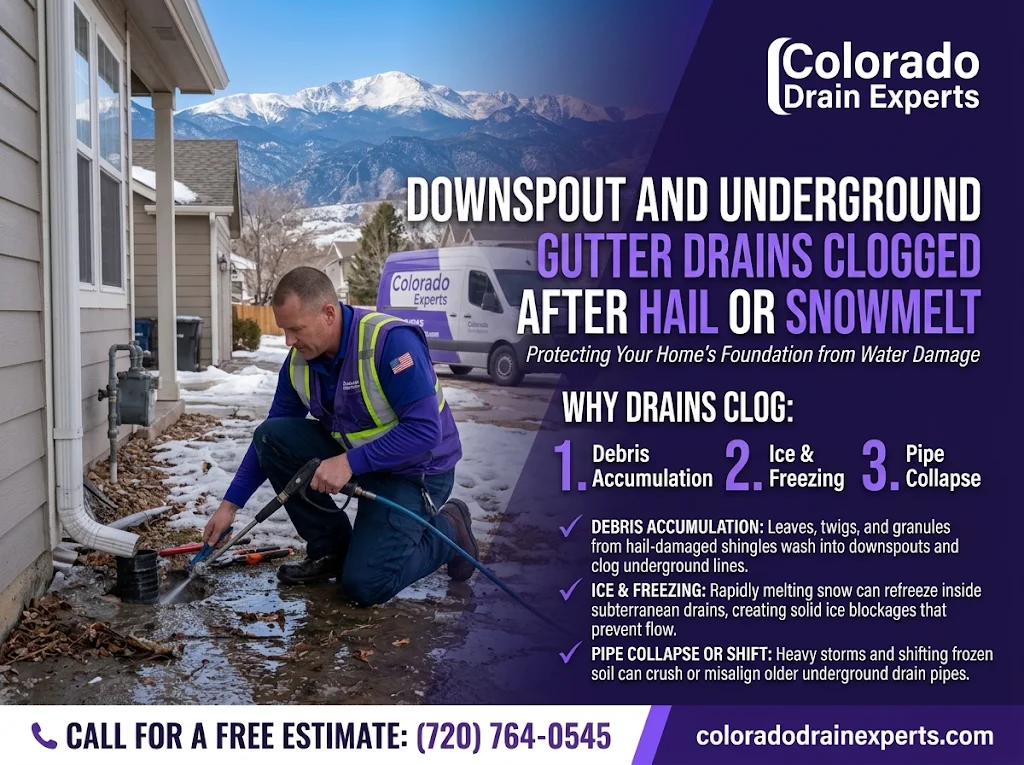

It is the coldest morning of the year, the furnace is running, and nothing in the house will drain. The shower fills, the toilet will not flush properly and the washing machine is still full from last night. In much of the country that means a clog. In Colorado, especially after a night near or below zero, it very often means ice.
Frozen drain lines are one of the most common winter calls we take, from foothill cabins along US 285 to farmhouses on the plains of Weld County. This guide explains how to tell a frozen line from a clog, what you can safely try yourself, what professional thawing involves and costs, and how to keep it from happening again.
A frozen drain line in Colorado usually shows up suddenly after a hard cold snap, when every drain below the frozen spot stops at once. Stop using water, try gentle heat only on exposed pipe you can reach, and never use an open flame. Professional steam thawing costs about $200 to $600 and usually restores drains the same day.
Why Drain Lines Freeze in Colorado
Water in a drain line normally keeps moving, which is why drains freeze less often than supply pipes. The trouble starts when a section of drain pipe holds still water or runs through cold space. In Colorado, a few conditions cause most of the frozen drains we see:
- Shallow lines. Frost depth is set by each county and city, often around 30 to 36 inches along the Front Range and deeper in the mountains. A line that was laid shallow, or that crosses a spot where soil was scraped away for a driveway, sits in frozen ground every January.
- Bare, windswept ground. Snow is good insulation. Where wind strips a yard bare on the eastern plains, or where a driveway is plowed right over the line, frost goes deeper.
- Crawl spaces and outside walls. Drain pipe running through a vented crawl space or an exterior wall can freeze in a few hours of wind, especially in older homes in towns like Pierce, Ault and Nunn.
- Low spots that hold water. A sag in a line holds a little water all the time. On a cold night, that pocket freezes and the ice grows each time more water arrives.
- Light use. Weekend cabins, rentals between tenants and homes where the owners travel in winter send very little warm water down the line, so there is nothing to keep it open.
Homes on septic are especially exposed because the line from the house to the tank and the tank lid are often shallow. Our pages for drain cleaning in Conifer, drain cleaning in Pine and drain cleaning in Nunn cover the local versions of this problem in more detail.
Signs Your Drain Line Is Frozen, Not Clogged
- Drains stopped suddenly overnight during very cold weather, and worked fine the day before.
- Several fixtures stopped at once, usually everything on the lowest floor first.
- Water rises in the tub or shower when you flush a toilet or run the washer.
- There is no gurgling or slow draining in the days before, which you would expect with a clog.
- On a septic system, the tank is not due for pumping and the problem started with a cold snap.
A frozen line and a clog can happen together. Grease or a partial blockage slows water down, and slow water freezes faster. That is one reason we run a camera after thawing a line, to see whether something else caused the freeze.
What to Do Right Away
- Stop running water. Every gallon you send down has nowhere to go and will come back up at the lowest drain, often a basement floor drain or shower.
- Find the cold spot if you can. Check pipes in a crawl space, garage, or along an outside wall for frost or ice. If the frozen section is exposed and reachable, you may be able to warm it gently.
- Use gentle heat only. A hair dryer, a space heater set a safe distance away, or warm towels on exposed pipe are fine. Never use a torch or open flame, which can crack pipe and start a fire inside a wall.
- Open cabinet doors under sinks on outside walls so house heat reaches the pipes.
- Call if nothing changes in an hour, or if the frozen section is underground, inside a wall or between the house and the street or septic tank.
Avoid chemical drain openers. They do not melt ice, they sit in the line until it thaws, and they make the job dangerous for whoever opens the pipe next.
How Professionals Thaw a Frozen Drain Line
When we arrive, we start at the nearest cleanout or open fixture and work toward the ice. The usual tool is a steam or hot water jetter, which sends heated water through a flexible hose that moves forward as the ice melts. It reaches frozen spots fifty feet or more away without digging. For shorter runs we may use a heated cable. Once water is flowing again, we run a sewer camera through the line to check for cracks, sags or a blockage that let the ice form.
If the line froze because of a low spot or a crack, you will see it on the screen and we will explain the options. Most homes only need a thaw and a little prevention. Some need a section of pipe insulated, rerouted or replaced. Our emergency drain service runs day and night through the winter.
What Thawing a Frozen Drain Costs in Colorado
| Service | Typical price range |
|---|---|
| Frozen drain line thawing | $200 to $600 |
| Sewer camera inspection after thawing | $175 to $375 |
| Main line cabling if a clog is also present | $225 to $450 |
| Heat cable or insulation on an exposed section | Quoted on site |
| After-hours or weekend visit | Standard rate plus $75 to $150 |
The price depends mainly on how far the ice is from the access point, how deep the line is and how easy the cleanout is to reach. Long runs to a septic tank on a rural property sit at the upper end. You approve the price before any work starts.
How to Keep Drain Lines From Freezing
Before winter
- Insulate drain pipes in crawl spaces, garages and along outside walls. Foam pipe insulation is inexpensive and easy to install.
- Close crawl space vents for the winter, or cover them, especially on the windward side of the house.
- Have a line that froze last year checked with a camera in fall. If it has a sag, fixing it once is cheaper than thawing it every January.
- On septic properties, pump the tank in fall and install a riser so the lid can be reached in snow.
During cold snaps
- Keep water moving. A small trickle from one faucet on the coldest nights keeps warm water flowing through the main drain.
- Leave snow on top of buried lines and tanks. Do not plow or shovel those areas bare.
- Keep the heat on, at least in the mid 50s, even when you are away.
- Spread laundry and showers through the day instead of running them all late at night when the line is coldest.
For cabins and empty homes
If a cabin or rental sits empty for weeks, either winterize it fully or arrange for someone to run water every few days. Homes in the foothills around drain cleaning in Evergreen and drain cleaning in Idaho Springs freeze most often when nobody is home to notice the first sign.
Frequently Asked Questions
How do I know if my drain line is frozen and not clogged?
A frozen line usually stops suddenly on a very cold morning, often after a night below zero, and every drain downstream of the frozen spot stops at once. A clog tends to build over days, with slow draining and gurgling first. If the problem started overnight during a cold snap and the house was fine the day before, ice is the likely cause.
Can I pour boiling water down a frozen drain?
Hot tap water poured slowly can help when the ice is close to the drain opening, such as a trap under a sink on an outside wall. Boiling water can crack porcelain and soften PVC joints, and it will not reach ice that is twenty feet away in a crawl space or under the yard. If the first gallon does not move anything, stop and call.
How much does it cost to thaw a frozen drain line in Colorado?
Colorado Drain Experts charges $200 to $600 for most frozen line thawing, depending on how long and how deep the run is and how hard it is to reach. Night and weekend calls add $75 to $150. If the camera shows the pipe cracked when it froze, the repair is quoted separately before any work.
Will a frozen sewer line thaw on its own?
Sometimes, once the weather warms up, but that can take days or weeks for a buried line, and meanwhile the house has no working drains. Waste that keeps backing up behind the ice can also overflow into the lowest drain in the home. If you need the drains back the same day, steam thawing is faster and safer.
How do I keep my septic line from freezing?
Keep water moving through the line every day, leave snow cover on top of the line and tank rather than plowing it bare, and insulate any section that runs shallow or exposed. If the home sits empty in winter, have someone run water every few days or winterize it properly. Colorado Drain Experts can add heat cable or insulation where a line keeps freezing.
Southern Colorado has its own frozen line hot spots. At 8,500 feet, Woodland Park sees deep cold from December into March, the shaded canyon towns of Cascade and Green Mountain Falls freeze early in Ute Pass, and wind across the Palmer Divide hits Monument and Palmer Lake harder than Colorado Springs below. Each of those pages covers the local version of the problem.
Get Frozen Drains Moving Again
Colorado Drain Experts thaws frozen drain and sewer lines across the Denver metro, Northern Colorado and the foothills, 24 hours a day through the winter. We find the frozen spot, open it with steam, check the pipe with a camera and tell you plainly what, if anything, needs fixing. See our full list of Colorado service areas or read our Colorado drain cleaning cost guide.
Related guides: Gurgling toilet causes and fixes, Septic system cost in Colorado.
Colorado Drain Experts, 1701 Logan St, Denver, CO 80210. Phone (720) 764-0545. Office hours Monday to Saturday, 9 AM to 6 PM, with emergency service 24/7. Northern Colorado callers can reach our team at (970) 408-5086 and Colorado Springs callers at (719) 728-1450.